Thai Weekday Animals: The Lion, Horse, Buffalo and Elephant That Carry the Stars
Thai weekday animals carry the planets in traditional imagery. Learn about the lion, horse, buffalo and elephant, plus Rahu's mount and eclipse symbol.
Even stars have mounts
In Indian and Thai tradition, celestial bodies are not just balls of fire or rock but divine figures, the Navagraha (นพเคราะห์) deities. Each deity has an animal to ride, called a phahana (พาหนะ), a “vehicle” or mount. That is why temple murals, amulets and illustrations in old astrology books show a different animal beside each star.
The pairing of stars and animals gets you further into Thai culture if you learn it along with the weekday colors. This article collects the pairings widely given in Thai-language sources. We should say upfront that some pairings are told differently depending on the book and region.
Weekday animals at a glance
Sunday, the Sun (พระอาทิตย์): a lion (ราชสีห์, ratchasi)
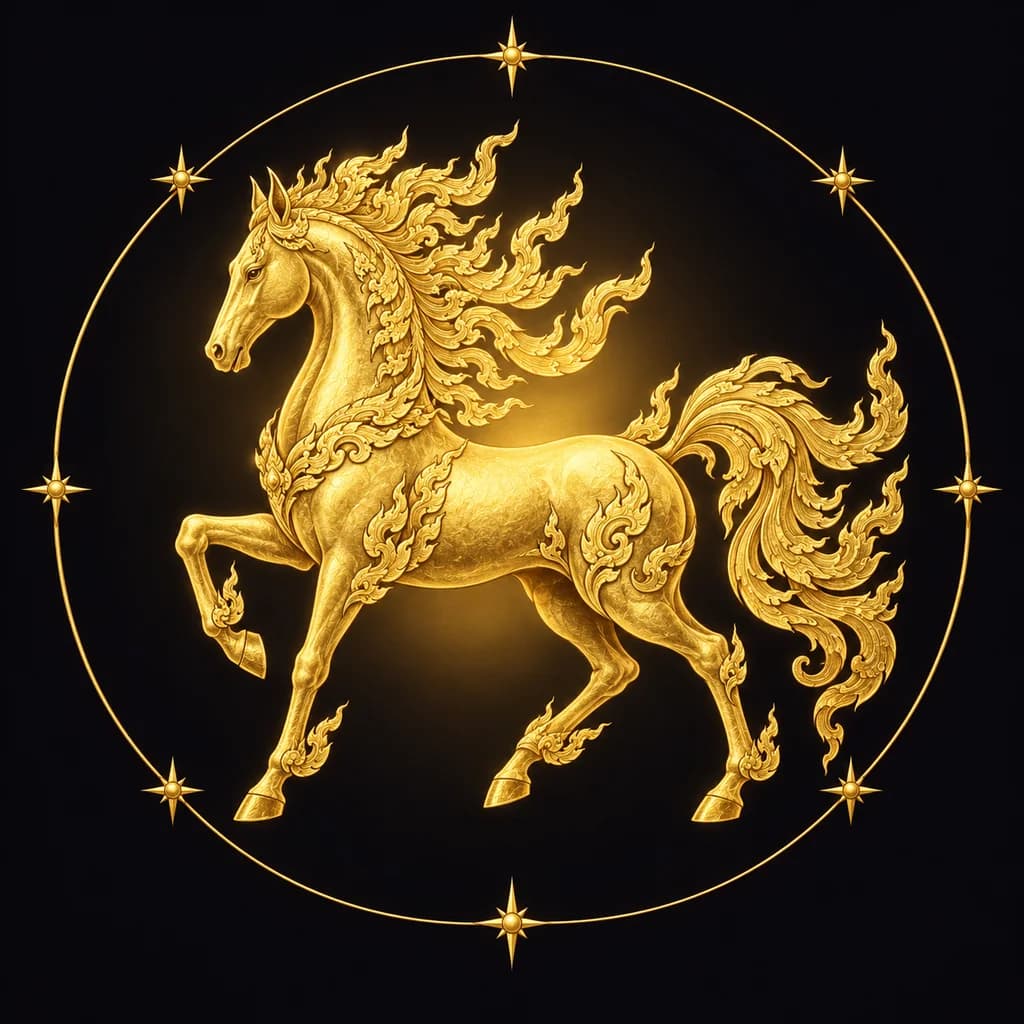
Monday, the Moon (พระจันทร์): a horse
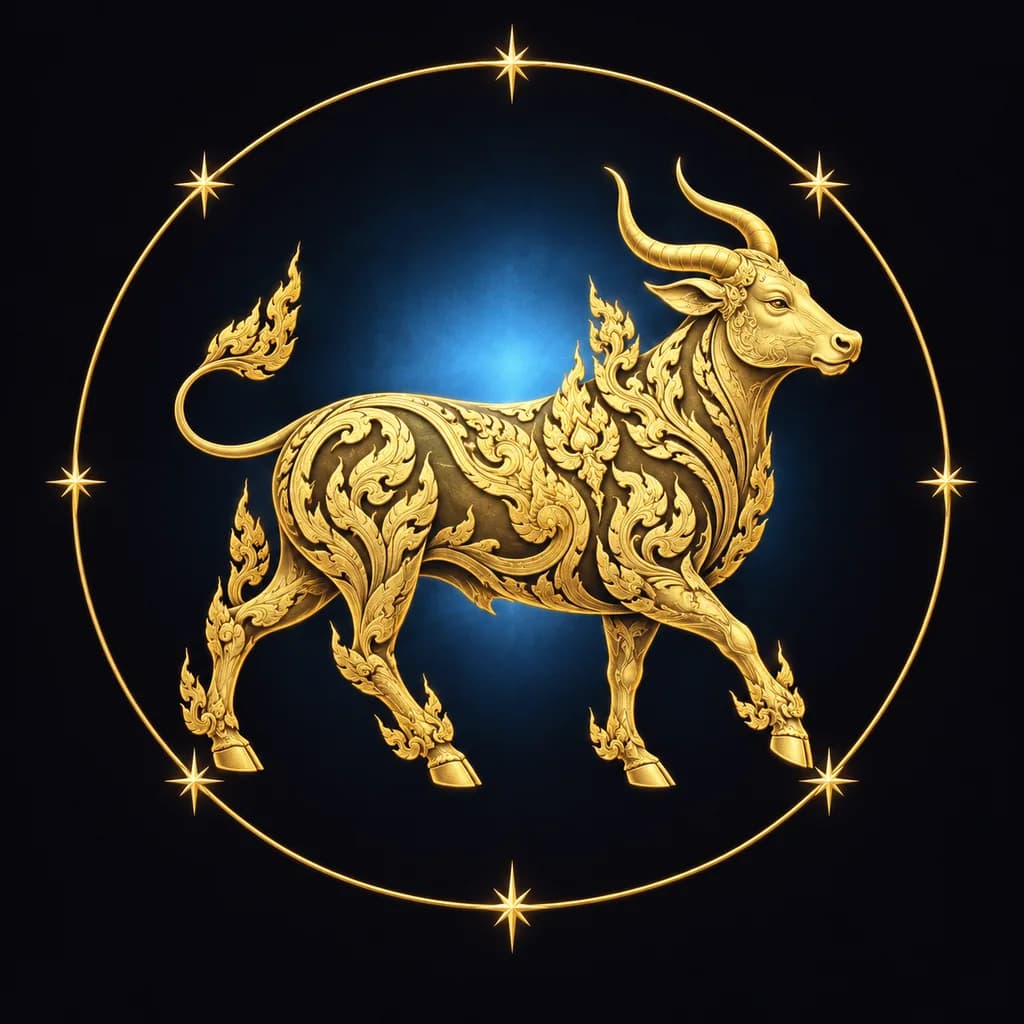
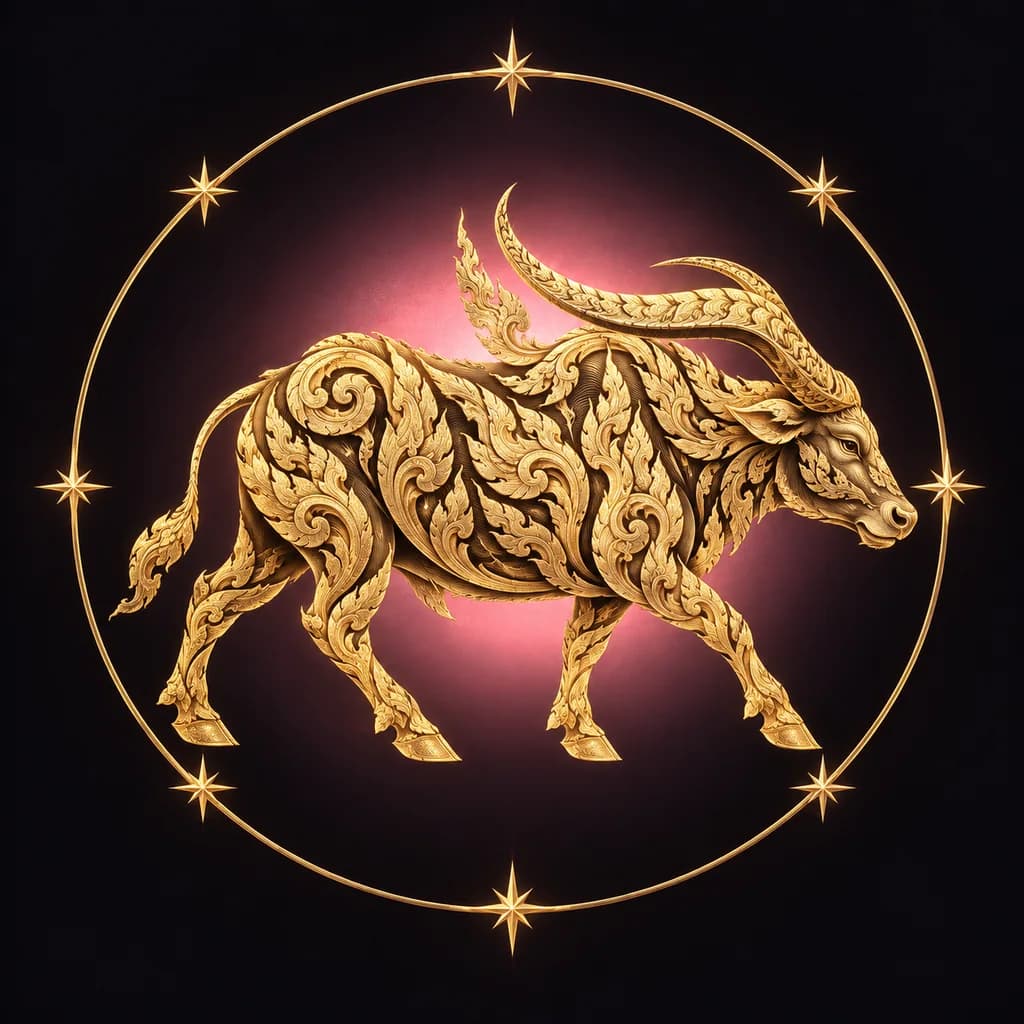
Tuesday, Mars (พระอังคาร): a buffalo (กระบือ)
Wednesday daytime, Mercury (พระพุธ): an elephant (คชสาร). Some sources say a white elephant.
Wednesday night, Rahu (พระราหู): a garuda (ครุฑ) is the most widely given, but sources differ. We unpack that below.
Thursday, Jupiter (พระพฤหัสบดี): a deer
Friday, Venus (พระศุกร์): an ox (โค)
Saturday, Saturn (พระเสาร์): a tiger
These pairings draw on Sanook’s summary of the Navagraha deities and on the mural record from a temple in Khon Kaen introduced by Isan Insight.
Lion, horse, buffalo and elephant
The Sun rides a lion on Sunday. A king of the animals seems a fitting companion for the king of the sky. In Thai the lion is called ratchasi (ราชสีห์), a name that covers both the lion and its mythical counterpart. The Moon rides a horse on Monday. Picture a white horse running under moonlight. Other Indian texts have the Moon’s chariot drawn by an antelope, so even for the Moon the stories vary by place.
Mars rides a buffalo on Tuesday. It is a powerful animal that pushes ahead once it has made up its mind, which is said to suit the energy of Mars. Mercury rides an elephant on Wednesday daytime. In Thailand the elephant symbolizes wisdom and good fortune, a fitting partner for Mercury, who presides over learning and speech.
Deer, ox and tiger
Jupiter rides a deer on Thursday. Jupiter is regarded as the star of teachers and learning, and the gentle image of a deer resembles that character. Venus rides an ox on Friday. Venus is introduced as the star of love, beauty and abundance, and the ox is a symbol of abundance and gentleness.
Saturn rides a tiger on Saturday. Some people explain that a tiger’s weight and menace fit a star that moves slowly but heavily. Such explanations may have been added later, though; there is no official tradition explaining why a given animal was paired with a given star. You can simply enjoy it as a symbolic system in which seven animals are assigned to the seven stars of the sky.
What does Rahu ride?
Rahu, who guards Wednesday night, has a mount that differs by source. In the Thai account compiled by Sanook, Rahu rides a garuda. The garuda is a divine bird from Buddhist and Hindu mythology, and in Thailand also a symbol of the crown and government offices.
Thai Wikipedia, on the other hand, says Rahu rides a blue lion (ราชสีห์สีน้ำเงิน), and English Wikipedia gives a black lion from Indian tradition. Isan Insight, describing a temple mural in Khon Kaen, notes that Rahu is usually depicted with a garuda but that the garuda is absent in that mural. So Rahu’s mount is not fixed. In this article we give the most widely cited one, the garuda, first, while stating that there are differing views.
Enjoying the animal stories
Weekday animals appear on amulets, calendars, picture books and souvenirs. In the murals of Thai temples and in the illustrations of astrology books, a star drawn with its animal is at once an explanation of “this star’s character” and a small picture story. It is also a visual device that lets you recognize a star by its animal even without reading the words.
Having one animal for your weekday can feel quietly reassuring. You can picture pride for Sunday’s lion, a soft gallop for Monday’s horse, grit for Tuesday’s buffalo, wisdom for Wednesday daytime’s elephant, gentleness for Thursday’s deer, abundance for Friday’s ox and weight for Saturday’s tiger. Just remember this is one way of enjoying the images, not the tradition’s official interpretation.
So Wednesday night looks like an eclipse
Apart from the question of animals, the image that best represents Rahu is a head trying to swallow the Moon or Sun. In Hindu and Buddhist myth, Rahu is the asura who slipped in among the gods during the churning of the ocean and drank the nectar of immortality. The Sun and Moon recognized him and told Vishnu, who cut his body with his disc. The nectar had already reached his throat, so the head did not die, and the head alone chases the Sun and Moon to swallow them. But with no body, the swallowed Sun and Moon come out through his throat again. That is the explanation of solar and lunar eclipses.
In the Pali Buddhist texts, the Candima Sutta and Suriya Sutta, Rahu seizes the Moon and Sun and then releases them when they recite a verse of reverence for the Buddha. That is why Thai temples enshrine sculptures of Rahu with the Moon in his mouth, and why Rahu is told of both as a fearsome figure and as one who took refuge in the Buddha and let the Sun and Moon go.
This is also why Horasat draws Wednesday night not as an animal but as an eclipse symbol. The other seven stars have easy animal symbols, but Rahu’s mount is read differently by different sources, while the story of a shadow swallowing the Moon is the one thing they agree on. After reading this, the round shadow on screen may look a little different to you.
Frequently asked questions
Does my weekday animal really protect me?
It does not promise protection; it is an old symbolic system. It is best taken as an amulet motif or something to chat about.
Is Mercury’s mount a white elephant or an elephant?
Sources say either “elephant” or “white elephant”. The white elephant is especially treasured in Thailand, so the two are often used with the same meaning.
Doesn’t Ketu have a mount?
Ketu is introduced as shown with a serpent, but since Ketu is not a star that guards a weekday, we did not include it among the weekday animals here.
Sources consulted
External references used while writing this guide. The summaries and interpretation are by the Horasat editorial team.